A pool resurfacing contractor in Jenks looks at chalky texture, rough spots, and staining on a pool shell and tells a homeowner, in writing, whether the fix is a localized patch or a full strip-and-reapply job. Jenks pools built in the 1990s and 2000s, common in Woodland Park and Southern Trails, are now 20+ years into plaster or gunite life, which is exactly the age range where surfaces start chalking and staining before Memorial Day openings.
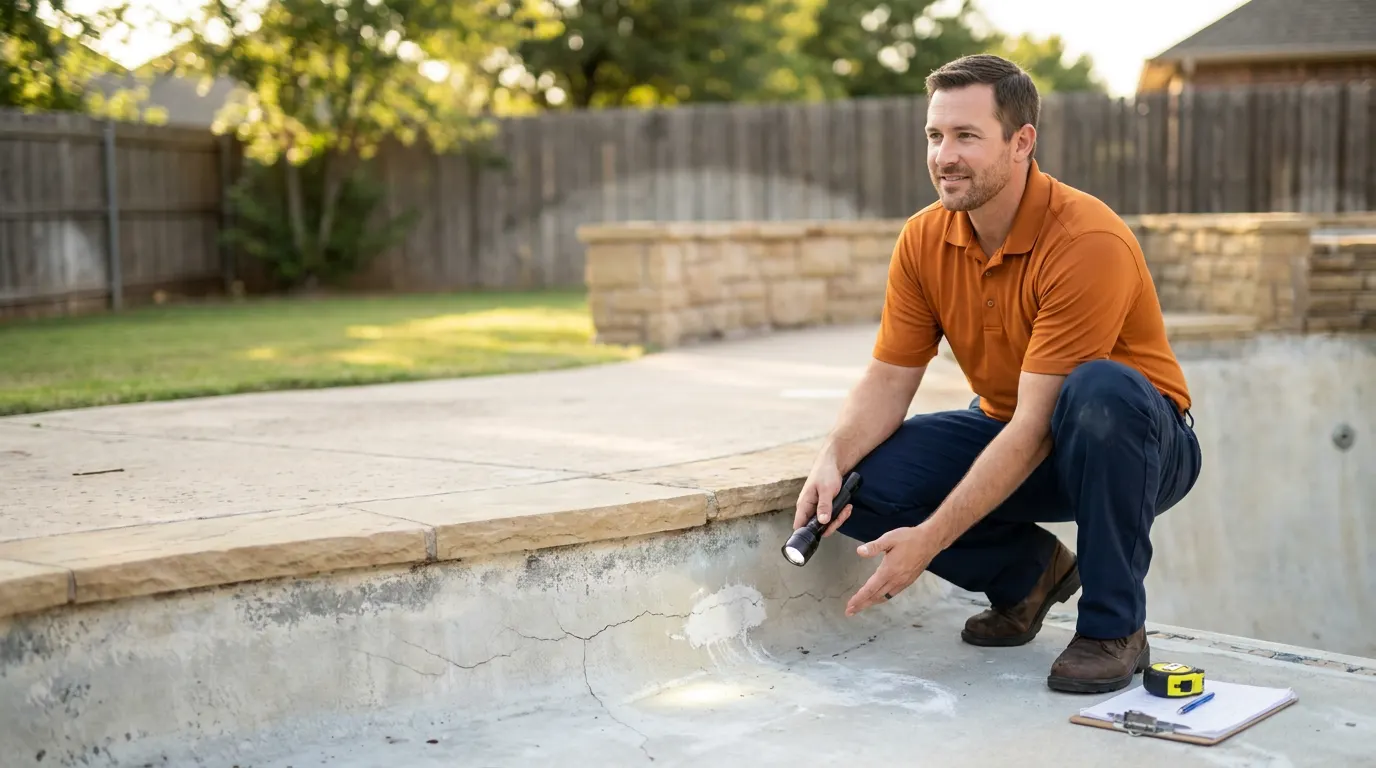
A pool resurfacing contractor in Jenks, OK is a licensed tradesperson who diagnoses gunite, plaster, or pebble-finish wear on residential pools and either patches the affected area or strips and reapplies a full new surface coat.
Every service reflects the same meticulous attention to detail, whether it's a single job or a larger pool resurfacing contractor project across Jenks.
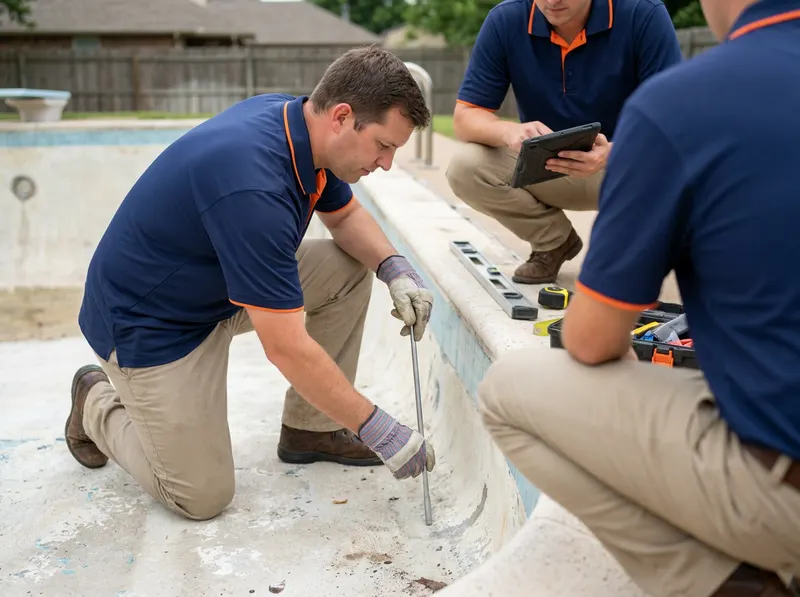
A walk of the shell, waterline, and steps to identify whether roughness, staining, or chalking is cosmetic wear or a sign of deeper shell/rebar issues, documented in writing before any repair or resurface is quoted.
Get a quote →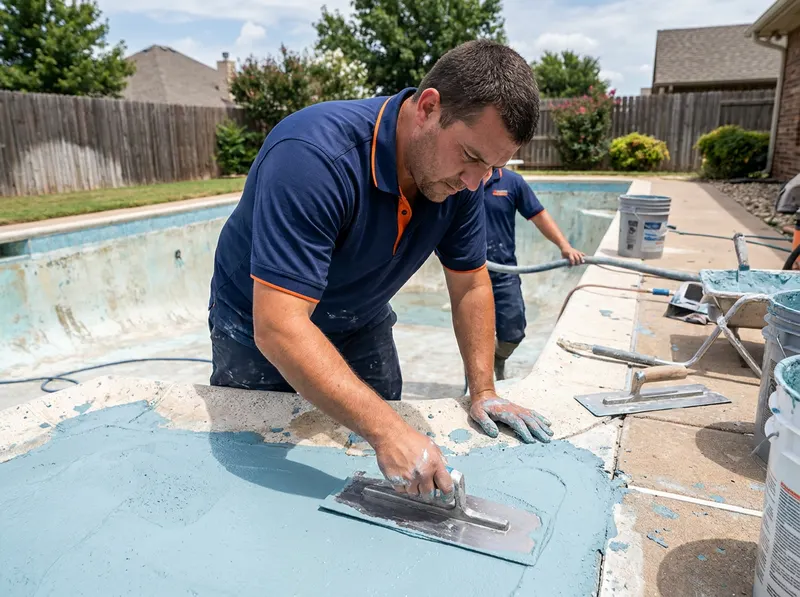
Full strip of the old plaster coat down to the gunite shell, crack and rebar check, then a fresh white or gray plaster application, the most common resurface for 15-25 year old Jenks pools.
Get a quote →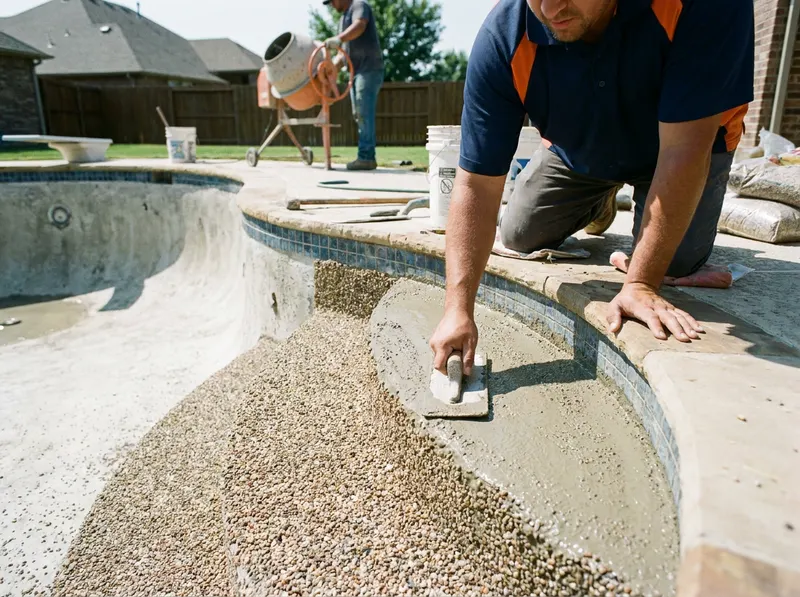
Textured aggregate finish applied over the prepped shell for homeowners who want a longer-wearing, non-slip surface than standard plaster, typically at a higher material cost per square foot.
Get a quote →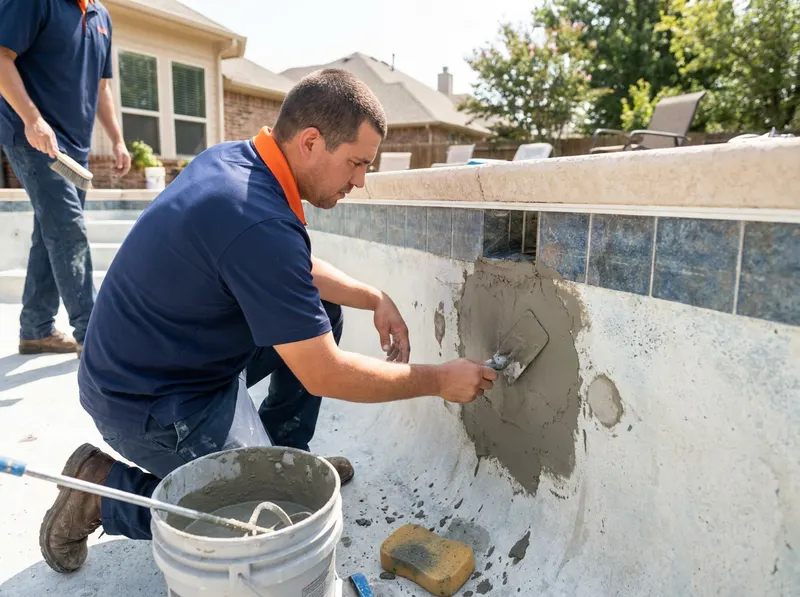
Targeted repair of a rough or stained section of shell without draining and redoing the entire pool, appropriate when the surrounding plaster is still structurally sound and only a portion has failed.
Get a quote →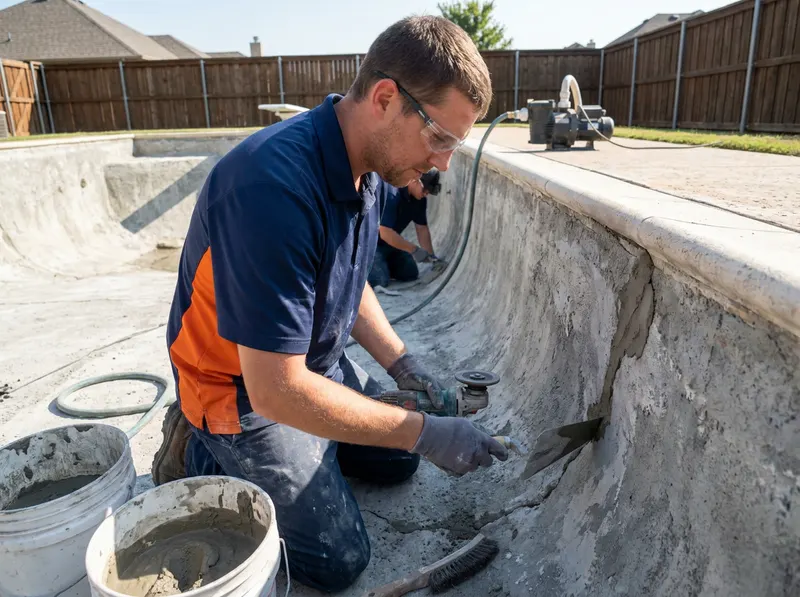
Repair of cracks or exposed rebar found under old plaster during the diagnostic inspection, addressed before any new surface coat is applied so the new finish isn't laid over an unresolved structural issue.
Get a quote →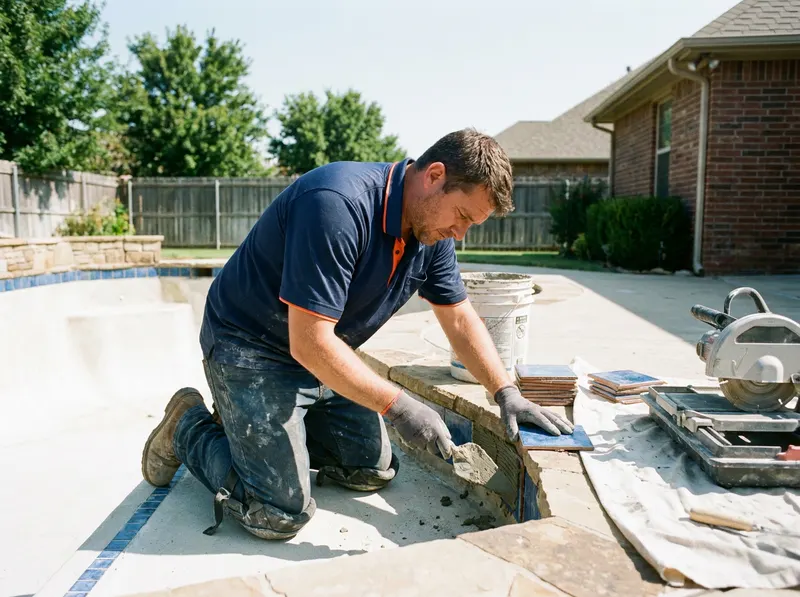
Replacement of chipped, loose, or stained waterline tile, commonly done at the same time as a resurface since the pool is already drained and the waterline band is already exposed.
Get a quote →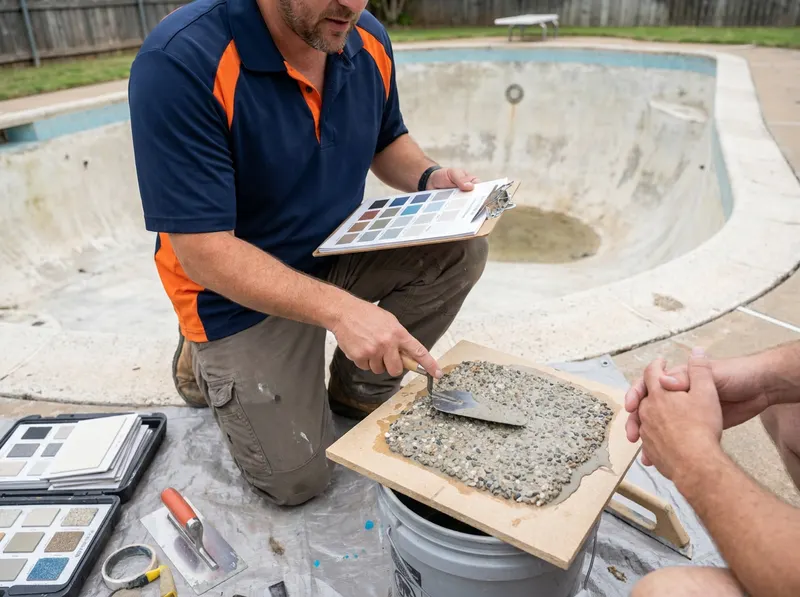
On-site review of finish color and aggregate options against the homeowner's decking and landscaping, useful before committing to a plaster shade or pebble blend that will show for the next 10-15 years.
Get a quote →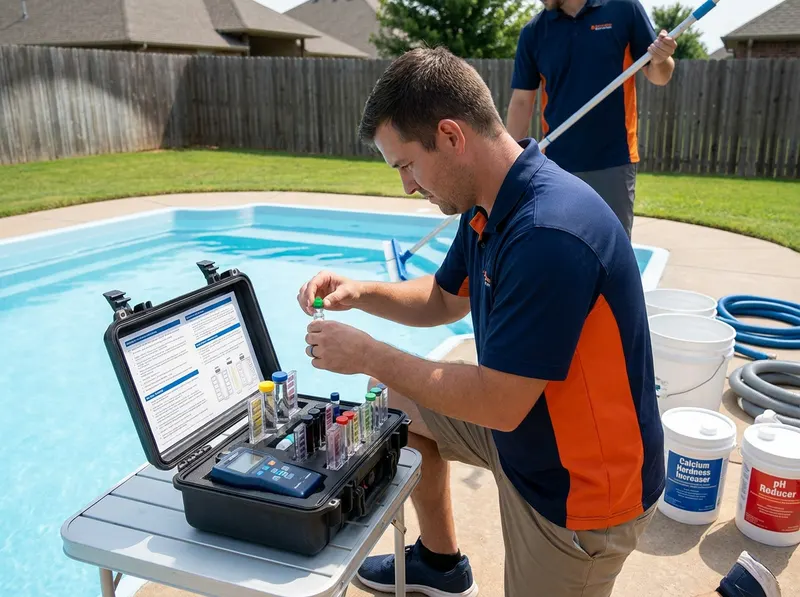
Initial fill, brushing schedule, and chemical balancing in the first 7-14 days after plaster or aggregate is applied, since improper startup chemistry is one of the leading causes of early plaster staining.
Get a quote →You get a firm, itemized quote for your pool resurfacing contractor before any work begins, no surprises, no pressure.
Careful prep, tidy work, and a full cleanup when we are done. We treat your home and belongings like our own.
The same trusted, background-checked team from the first call to the final check.
If the surface is rough or chalky in isolated spots but the water still holds color and the shell has no visible cracking, a localized patch repair usually fits, it costs less and takes a day or two, but it will not match the sheen of the surrounding older plaster exactly. If the whole pool is uniformly rough, stained gray or brown across most of the shell, or the plaster is thin enough to expose gray gunite underneath, a full resurface fits better because patch material will not bond evenly to that much degraded surface. If the goal is the lowest cost that gets through one more summer, standard white or gray plaster is the right call at roughly half the price of an aggregate finish.
If the goal is a longer-lasting surface with a textured, non-slip feel, and the budget allows it, pebble or quartz aggregate fits, trading a higher upfront cost for a surface that typically resists staining and chipping longer than standard plaster. The trade-off in every case is the same: patch jobs save money now but can telegraph as a slightly different texture or shade where old meets new; full resurfaces cost more and take the pool offline longer, but reset the entire shell at once.
Every project gets a firm, written price after a free on-site visit. Ranges below for orientation.
Many gunite pools in Woodland Park and Southern Trails were built during Jenks' major growth years in the late 1990s and 2000s, which puts a large share of the city's residential pools right at the 15-25 year mark where plaster typically starts chalking or staining. Pools closer to the Arkansas River floodplain and River Parks Trail corridor can also see mineral staining tied to local water hardness, which shows up as brown or gray blotching on plaster well before the surface is actually failing structurally, a detail that matters when deciding between a patch and a full resurface. Jenks' spring rush is real: families near Chisholm Trail Park and Oaks Country Club who want the pool ready before Jenks High School lets out for summer tend to call in February and March, which is why 4-6 week lead times build up fast heading into Memorial Day.
 Jenks Pool Resurfacing Contractor Co.