A pool in Stone Canyon or Southern Trails that has gone rough, chalky, or gray-stained after 12-18 years of Oklahoma freeze-thaw cycles is usually showing normal plaster wear, not a structural failure. Plaster is a…
A pool in Stone Canyon or Southern Trails that has gone rough, chalky, or gray-stained after 12-18 years of Oklahoma freeze-thaw cycles is usually showing normal plaster wear, not a structural failure. Plaster is a calcium-based coating that etches over time as pool water chemistry and temperature swings pull calcium hydroxide out of the surface. That etching is what causes the sandpaper feel on hands and feet, and it's a cosmetic and surface-integrity issue that standard resurfacing corrects. The distinction that matters before any quote gets written is whether the rough texture is confined to the plaster layer or whether it has progressed into cracking that reaches the rebar or shell beneath it. A visual chip-test on a small section of the shallow end, done during the initial walk-through, answers that question directly rather than guessing from staining alone.
Standard plaster resurfacing fits pools where the shell itself is sound: no structural cracks, no rebar exposure, no persistent leaks tracked back to the gunite. It's the right call for a 10-20 year old pool in Woodland Park or Chapel Creek showing chalky texture, dull color, or minor staining that hasn't been traced to a plumbing or structural cause. The trade-off against a full renovation (which might include re-plumbing, tile replacement, or shell repair) is straightforward: standard resurfacing addresses the swim surface only, so if the underlying cause is a cracked return line or settling shell, a new plaster coat will look good for a season and then show the same symptoms again. That's why the diagnostic step comes before the quote, not after.
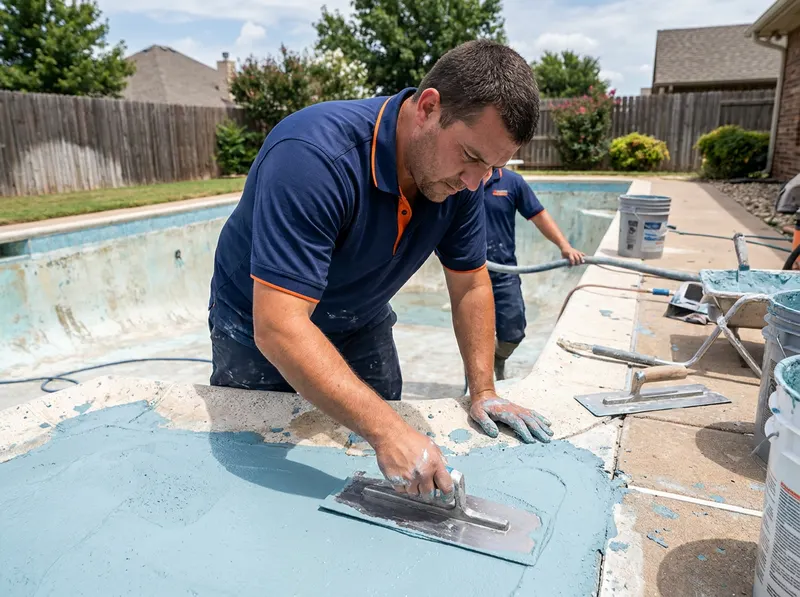
The resurfacing sequence itself is a fixed order regardless of neighborhood: the pool is drained completely, the old plaster is chipped out with pneumatic hammers down to the gunite, any structural cracks found during chip-out get patched and documented, then new plaster is troweled on in a single continuous pour to avoid cold joints or lap lines, and the pool is acid-washed and refilled. Refill on a typical Jenks residential pool (15,000-20,000 gallons) takes 24-48 hours depending on water pressure and hose setup, and the plaster needs a brushing schedule during the first two weeks to cure evenly and avoid plaster dust settling unevenly on the floor. Homeowners near Ki Kanoni or The Estates at Jenks scheduling around a summer gathering should plan for the full 5-10 day window plus curing time, not just the plaster application itself.
On pricing: a per-square-foot range is a starting point, not a final number, because pool shape, step configuration, and how much old plaster has to be chipped out (deeper etching sometimes means a thicker or more labor-intensive chip-out) all move the total. Any quote given before an on-site walk-through and chip-test is a guess dressed up as a number. The written scope after inspection states plainly whether the job is standard resurfacing or whether cracking found during chip-out changes it into a repair-plus-resurface job, and that distinction is documented before work begins, not discovered halfway through.
Every job gets a firm, written price after a free on-site visit.
Tell us about your standard plaster resurfacing job in Jenks and we'll send a clear, written quote, usually the same day.
 Jenks Pool Resurfacing Contractor Co.