Chalky texture on a pool wall usually means calcium hydroxide has leached out of the plaster over years of chemical exposure and sun, a normal aging process rather than a sign of structural damage. That distinction…
Chalky texture on a pool wall usually means calcium hydroxide has leached out of the plaster over years of chemical exposure and sun, a normal aging process rather than a sign of structural damage. That distinction matters because Jenks homeowners in Stone Canyon and The Reserve at Woodland Park often assume rough or stained walls mean the shell itself is failing, when in most cases the gunite underneath is sound and the fix is a surface resurface, not a rebuild. The diagnostic step, running a hand across the surface, checking for hollow spots by tapping, and photographing any hairline cracks near the steps or waterline tile, determines which category a pool falls into before any number gets quoted.
Pebble and quartz aggregate fits pools where the existing plaster has worn down evenly across the shell, particularly in older pools common in Woodland Park and Southern Trails built with standard white plaster in the 1990s and early 2000s. A pool with isolated cracking near return jets or stair corners, more common in some Chapel Creek and Shadow Creek properties on shifting clay-heavy soil, may need a rebar or shell inspection before resurfacing gets scheduled at all, since applying a new finish over an active structural crack just hides the problem temporarily. The trade-off between pebble/quartz and standard plaster comes down to lifespan versus cost: aggregate finishes generally hold their color and texture longer under Oklahoma's UV exposure and chlorine cycling, but the material and labor cost more upfront than a plaster-only redo.
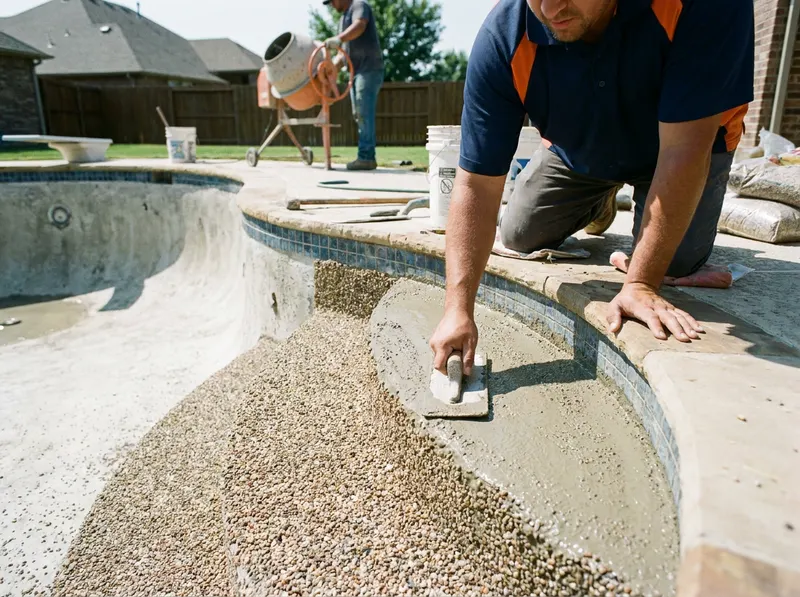
Families in The Estates at Jenks and Ki Kanoni who use their pool heavily through the Jenks Trojans' summer swim season and want a surface that resists staining from lawn irrigation runoff or nearby landscaping often lean toward quartz for its finer, smoother-underfoot texture, while pebble finishes get chosen more for a deeper, non-slip texture around sun shelves and steps. Either way, the shell gets drained, acid-washed or bead-blasted to remove the old surface, inspected for cracks or hollow spots, then rebuilt in the new aggregate layer before refill and a multi-day chemical balancing period. None of that gets quoted as a flat number until the pool has been walked and photographed, because two pools that look similarly worn from a photo can have very different amounts of prep work underneath.
Every job gets a firm, written price after a free on-site visit.
Tell us about your pebble & quartz aggregate resurfacing job in Jenks and we'll send a clear, written quote, usually the same day.
 Jenks Pool Resurfacing Contractor Co.