A patch is the right call when the wear is confined, a chip near a step edge, a hollow-sounding spot near a skimmer, a single hairline crack that hasn't spread. The test is simple: tap the surrounding plaster with a…
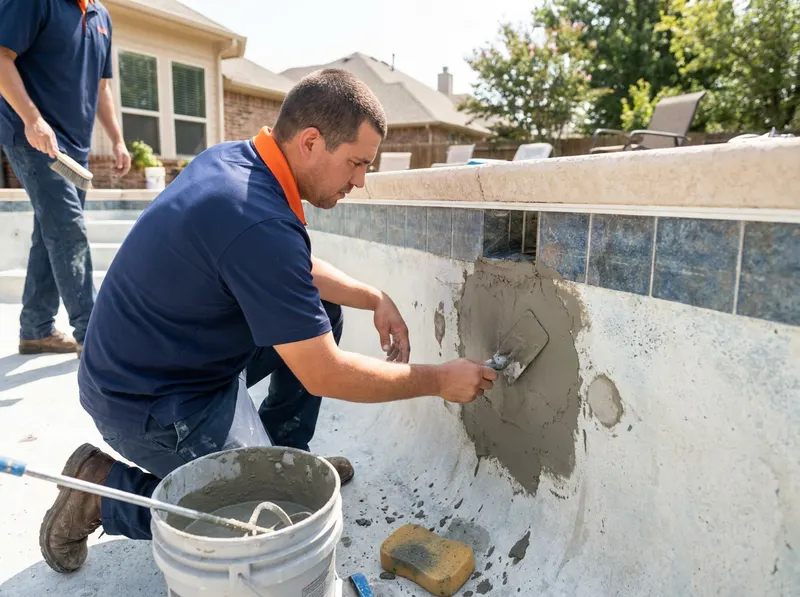
A patch is the right call when the wear is confined, a chip near a step edge, a hollow-sounding spot near a skimmer, a single hairline crack that hasn't spread. The test is simple: tap the surrounding plaster with a hard object. Solid plaster rings; delaminated plaster sounds dull or hollow. If that hollow area is small and isolated, patching it is honest work, not a stall tactic before a bigger sale. If the hollow sound follows a line across multiple feet of shell, or shows up in three or four separate spots around the pool, that's usually a sign the whole surface is failing together, and a patch there just buys a season before the next spot opens up nearby.
The distinction matters most in Jenks pools built in the 1990s and early 2000s, many of which are now 15-25 years past their original plaster application, a common age range in Woodland Park, Stone Canyon, and Southern Trails. Oklahoma's freeze-thaw cycles put stress on plaster bonds each winter, and pools that sit exposed near open yards in Chapel Creek or Shadow Creek tend to show chalking and pitting sooner than shaded pools tucked closer to tree lines in older sections of The Estates at Jenks. None of that means every rough patch needs a full resurface, it means the diagnosis has to happen before the number does.
Before any patch is quoted, the spot gets sounded and the edges are inspected for exposed rebar or a crack that runs into the gunite shell itself. If rebar is visible or the crack extends below the plaster line, that gets written down and shown, because a cosmetic patch over exposed steel or a structural crack will fail again within a season, patching it anyway would just move the problem, not solve it. When the damage is confined to the plaster layer with no structural exposure, the patch is straightforward: chip back to solid material, key the edges so the new plaster has something to grip, trowel and feather the new material to match the surrounding texture as closely as possible. Perfect color match on an aged surface is not guaranteed, new plaster cures lighter and will blend in over several months as it weathers with the rest of the pool.
Homeowners near Riverwalk Crossing or closer to Chisholm Trail Park sometimes ask about patching a spot themselves with a pool-store kit. That can hold for a few months on a cosmetic chip above the waterline, but it rarely bonds as well below the waterline where water pressure and chemical exposure are constant. A trowel-applied patch that keys into the surrounding plaster lasts longer because it becomes part of the shell's surface rather than sitting on top of it.
Every job gets a firm, written price after a free on-site visit.
Tell us about your localized plaster patch repair job in Jenks and we'll send a clear, written quote, usually the same day.
 Jenks Pool Resurfacing Contractor Co.